TempJetThe procedure
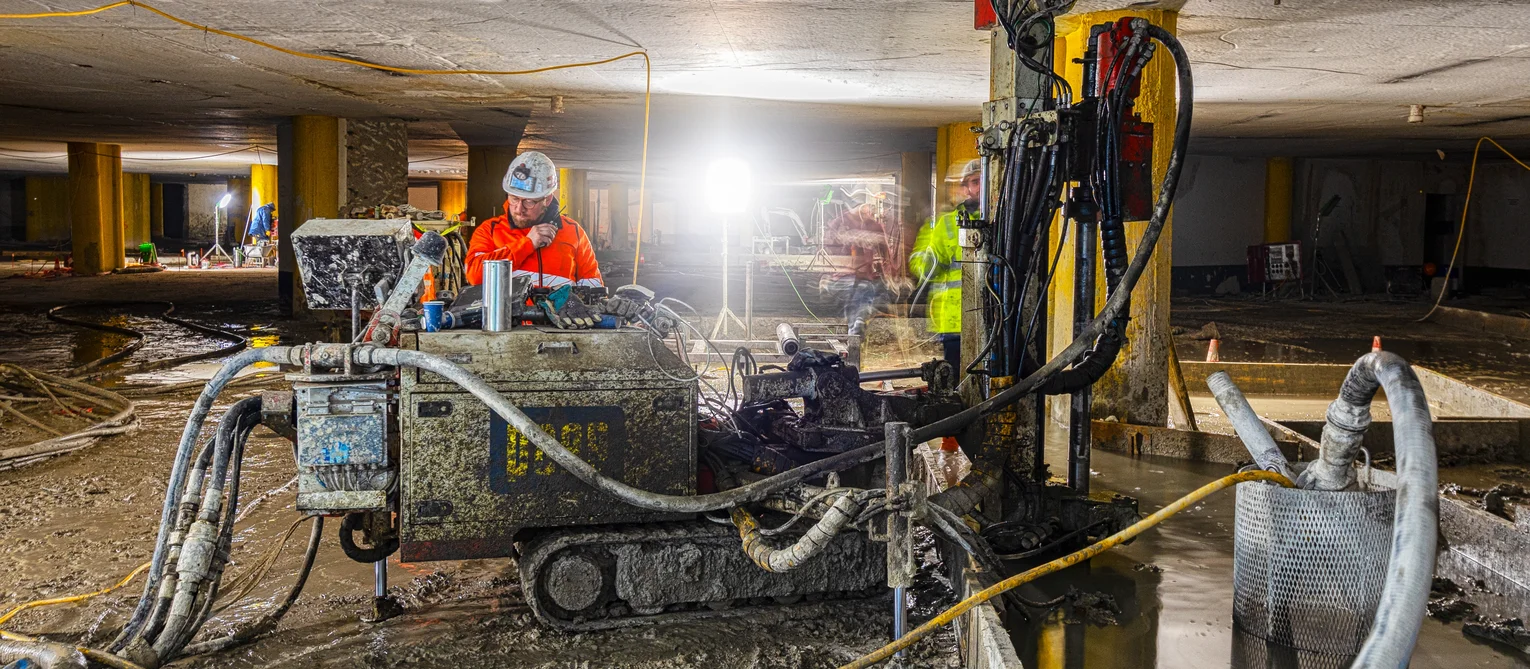
The patented TempJet process enables the quality control of DSV columns in a quick and efficient manner.

State of the art
Due to the nature of the method, the production of jet-grouted columns with the high pressure method takes place underground without visual inspection. However, any deviations in the soil structure or during production can significantly impact the quality of this soil improvement. This can equally affect the dimensions and mechanical properties of the improved soil. According to the applicable standard EN 12716, sample columns must therefore be provided and exposed before the actual jet-grouting work begins in order to adapt the production parameters to the existing soil – this takes a great deal of time and money.
The TempJet process
The patented TempJet process enables the quality control of DSV columns in a quick and efficient manner.
The TempJet method
The patented TempJet method enables quality control of the jet-grouted columns to be carried out quickly and efficiently. For this purpose, temperature sensors are installed in the still "fresh" column immediately after manufacture. They record temperature changes during the hydration process (i.e. during hardening of the improved soil).
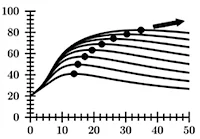
The temperature variations measured on site are then compared with numerically calculated temperature variations. This numerical calculation is carried out for a large number of value pairs consisting of diameter and binder content. Each value pair provides its own temperature curve. The calculated temperature curve that most closely matches the on-site measurement gives the actual diameter and achieved binder content in the jet-grouted column. The solution is clear since the binder content and diameter affect the temperature curve differently.
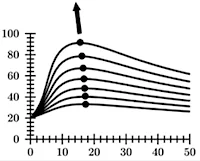
The calculated temperature curve that shows the greatest agreement with the on-site measurement gives the actual diameter and binder content achieved in the DSV column. The solution is clear, as the binder content and diameter influence the temperature curve differently.

The numerically obtained value pairs for diameter and binder content were verified during the development phase by applying this method to more than 60 subsequently exposed jet-grouted columns (2005-2007). Since then, this method has been used for more than 500 measurements. It was possible to demonstrate a very close match with the actually achieved diameters.
After the simulation, the predicted column diameter and the associated binder content of the manufactured jet-grouted column are shown in a result sheet.
Economic efficiencyTempJet process
From an economic point of view, the TempJet process has three main benefits
#1
Quality control of DSV work at greater depths is possible with little effort. Temperature sensors are installed above the drill rods for this purpose.
#2
For the first time, it is possible to estimate the binder content (cement content) achieved in the column.
#3
As the test column does not need to be exposed for the measurements, it can remain in place as a "structural column".
TempJet thus shows a possible savings potential of over 70 % compared to conventional methods of continuous quality assurance during the entire runtime, as well as for diameter determination prior to the actual construction work.


Calorimeter experimentLaboratory test
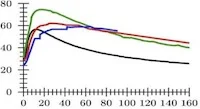
When water is added to a binding agent (e.g. cement), a chemical reaction occurs in which hydrate phases are formed. This “hydration” generates heat.
Heat flow calorimetry measures the continuous release of heat when water is added at constant temperatures (approx. 30 degrees Celsius). The documentation of this heat development over time (see illustration) acts as a type of signature for the corresponding binder. The height and timing of the heat peaks depend on various factors such as the temperature, the composition of the binder, how finely it is ground, and the ratio of water to binder.
This laboratory test usually takes 5 working days and is the basis of the TempJet evaluation. Recordings from the heat flow calorimeter are used to model the heat release of the binder. This information is compared with the heat development of the “in situ” measurement. It is then possible to use the TempJet algorithm to draw conclusions about the diameter and cement content of the jet-grouted column.